Black Mould Removal Sydney
Professional black mould removal and mould remediation for Sydney properties, with moisture diagnostics, containment, HEPA controls and structural drying used where required.
- 24/7 response for urgent mould issues across NSW
- Free inspections and quotes available statewide
- Moisture meters, thermal readings, HEPA air scrubbers and H-Class vacuuming used where required
Professional Black Mould Removal in Sydney
If you have visible dark or black mould in a Sydney property, the first step is to work out how extensive it is, what material is affected and whether the area is still damp. Black Mould Removal Sydney should not be approached as surface cleaning alone when mould is recurring, follows water damage, affects porous building materials or may extend into concealed areas.
On-Guard assesses visible contamination and the moisture conditions supporting it, then scopes the appropriate mould removal or remediation response. Depending on the property, this may include moisture readings, thermal checks, containment, HEPA filtration, surface treatment, hot-water extraction, structural drying and optional testing.
REQUEST A QUOTE
Trusted to restore safety and peace of mind
Posted on Google
 Phil Gale
Trustindex verifies that the original source of the review is Google.
I recently hired mark for mold remediation work at my home, and I couldn't be more satisfied with the service. From the initial consultation to the final inspection, mark was professional, knowledgeable, and extremely reliable. He arrived on time, explained the work clearly, and made sure everything was up to code.Posted on Google Simmeone HanlenCannot recommend Mark highly enough. He was patient, caring and understanding with such a sensitive matter. He and his team did an outstanding job and we were all so thrilled with the results as they exceeded our expectations.Posted on Google
 Charbel ElhageGreat and very reliable team you honestly will not find better and explains in ENGLISH exactly the issues and what needs done to fix it . Thanks to mark and the team job well done 🙏Posted on Google
 Trent ShahMark and the team are incredible at what they do. They are reliable, thorough, and take real pride in their work. You can tell he genuinely cares about providing the best possible service and making sure everything is done properly. If you’re looking for someone you can count on to get the job done right, Mark and On-Guard Sanitisation are the ones to call. Highly recommend!Posted on Google
 Joseph HalavazisI highly recommend the services of On-Guard Sanitisation. They are very reliable, empathetic, fairly priced and show dedication to their clients.Posted on Google
 Andrew GHighly recommend On-Guard's services. I have utilised their services for clients on multiple occasions and have consistently been impressed with their professionalism, quality of work and cost. Thank you guys!Posted on Google
 Susan ConollyOn-guard sanitation provided a service for the retirement village where I work. Mark was prompt, professional, very effective and kind and friendly to boot! I would definitely recommend their help on what is probably your worst day.Posted on Google
 Albert NasrallaMark has carried out lots of odd jobs for me both in the building and biohazard industries. I would not hesitate in hiring Mark again as he is polite, respectful and goes above and beyond every single time. Thank you Mark and On-guard Team!!Posted on Google
 Swati MitraMark and his team were extremely thorough and professional in conducting testing and remediation work. I would highly recommend them for anyone experiencing mould related issues. Mark was also kind enough to provide additional guidance on mitigating future issues.Posted on Google
 MARYANNE dayMark and his team did an excellent job. They were very thorough. I would highly recommend them for any job that needs specialist cleaning.
What Is Black Mould?
“Black mould” is a descriptive term rather than a precise scientific identification. Many moulds can appear dark green, brown, grey or black, so colour alone does not tell you the species, the severity of the problem or the correct remediation method.
Stachybotrys chartarum is one greenish-black mould species commonly associated with the phrase “black mould”, but appearance alone does not establish that a dark patch is Stachybotrys. The CDC notes that all indoor mould should be addressed with appropriate removal and moisture control rather than relying on colour to determine what action is needed.
Is Black Mould a Health Risk?
Indoor mould can affect people differently. NSW Health notes that some people may experience irritation or respiratory symptoms after mould exposure, while many people experience no symptoms.
People with asthma, allergies, other breathing conditions or weakened immune systems may be more sensitive to mould exposure. If you are experiencing health symptoms, seek advice from an appropriate healthcare professional. A mould remediation company should assess the building and contamination, not diagnose a medical condition.
What Causes Black Mould in Sydney Properties?
Mould needs moisture to grow. In Sydney properties, the issue may be linked to roof or plumbing leaks, storm or flood water, condensation, poor bathroom or laundry ventilation, high indoor humidity, damp subfloors, waterproofing failures or water-damaged materials that have not fully dried.
Finding the source matters because removing visible mould without correcting the moisture conditions may allow it to return. On-Guard’s existing remediation process uses moisture metres, thermal readings and airflow or humidity checks to help identify elevated or concealed dampness.
Where Black Mould Commonly Appears
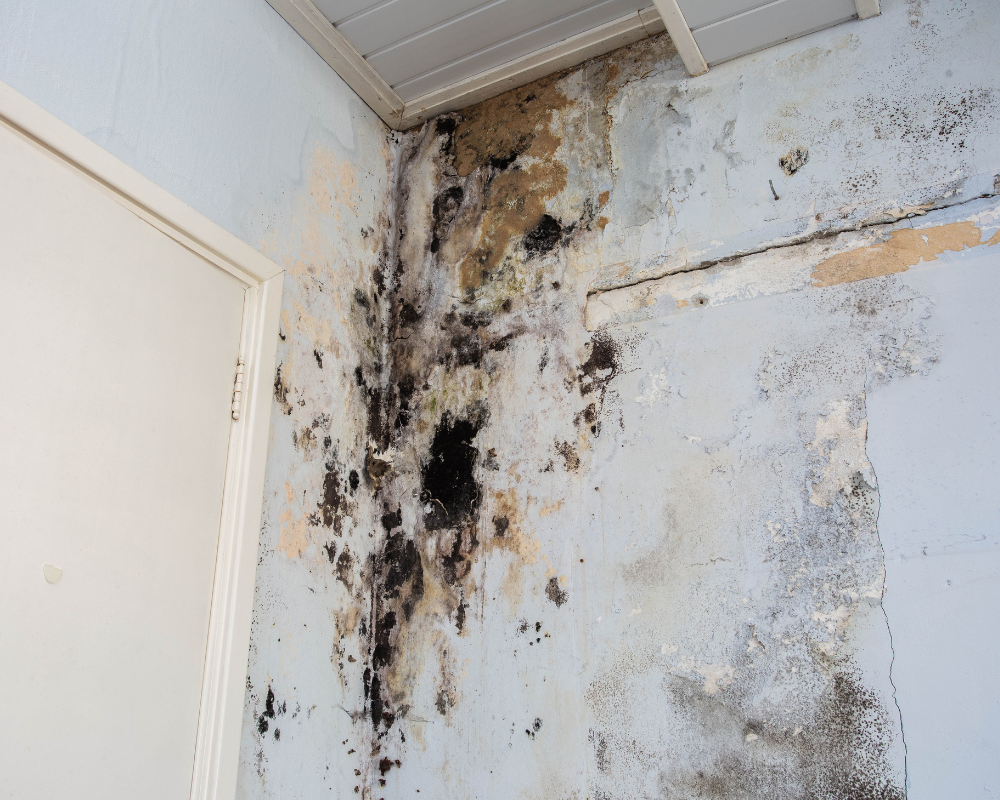
Black Mould on Bathroom Ceilings
Bathrooms combine warm air, steam and repeated condensation. If extraction is inadequate or moisture remains on ceiling surfaces, mould may continue to reappear even after cleaning.

Black Mould on Walls and Ceilings
Dark growth on plasterboard, painted walls or ceilings may be linked to condensation, roof leaks, plumbing leaks or moisture inside the wall or ceiling cavity. Porous materials may need more than surface treatment when contamination or moisture extends below the visible face.
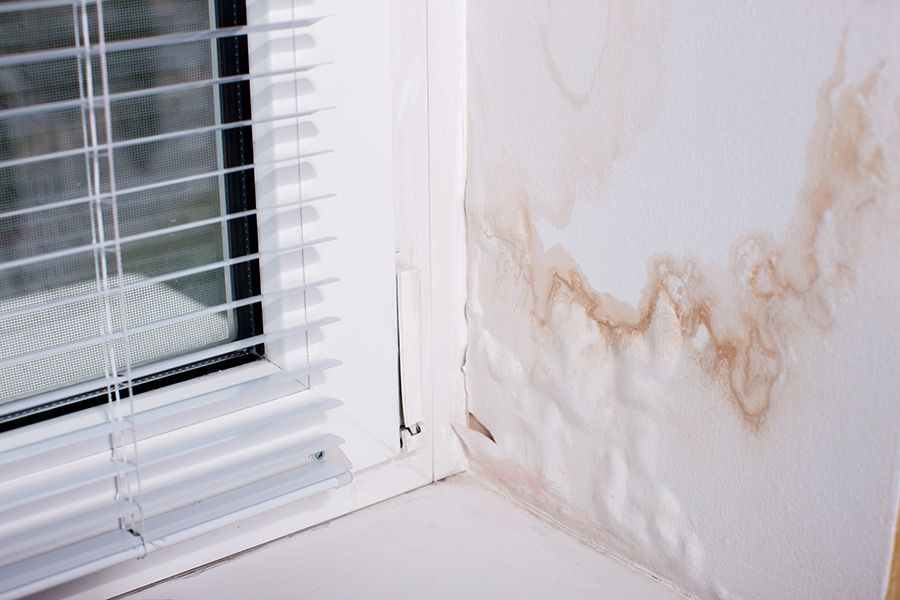
Black Mould Around Windows, Bedrooms and Wardrobes
Persistent window condensation, restricted airflow, furniture placed against cold external walls and elevated humidity may create localised damp areas in bedrooms and wardrobes.
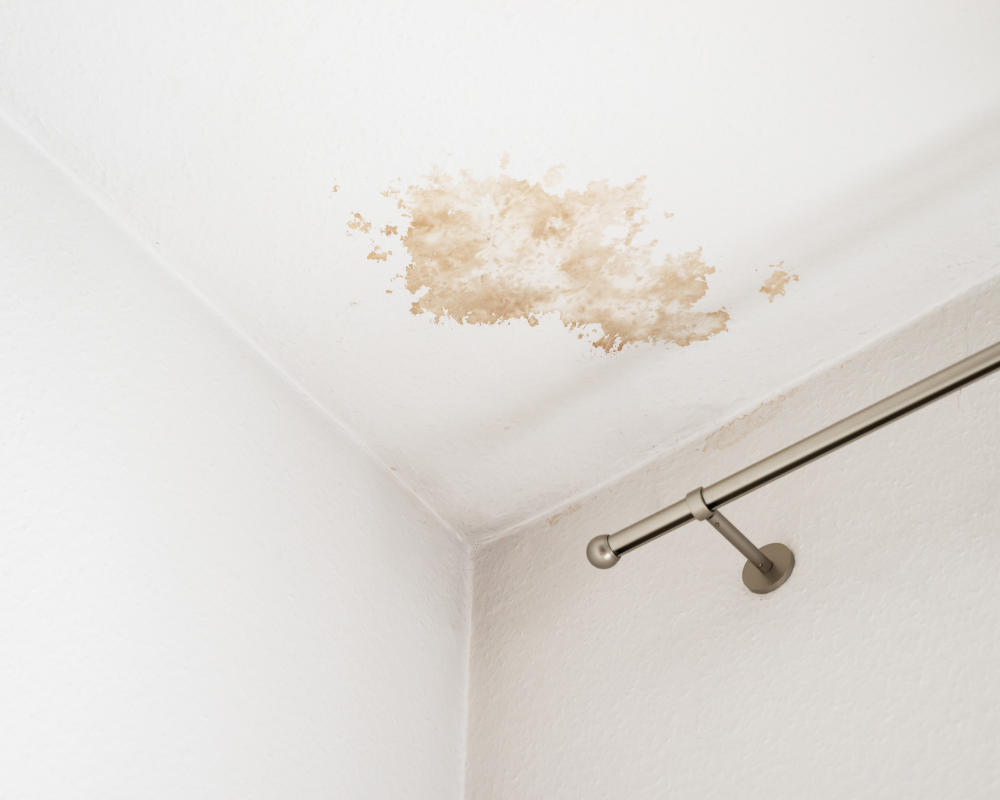
Black Mould in Subfloors or Roof Cavities
Subfloor dampness, poor ventilation, water ingress and roof leaks may allow mould to develop away from normal living areas. A musty smell or recurring mould inside the property may justify further investigation of concealed spaces.
Black Mould After Water Damage
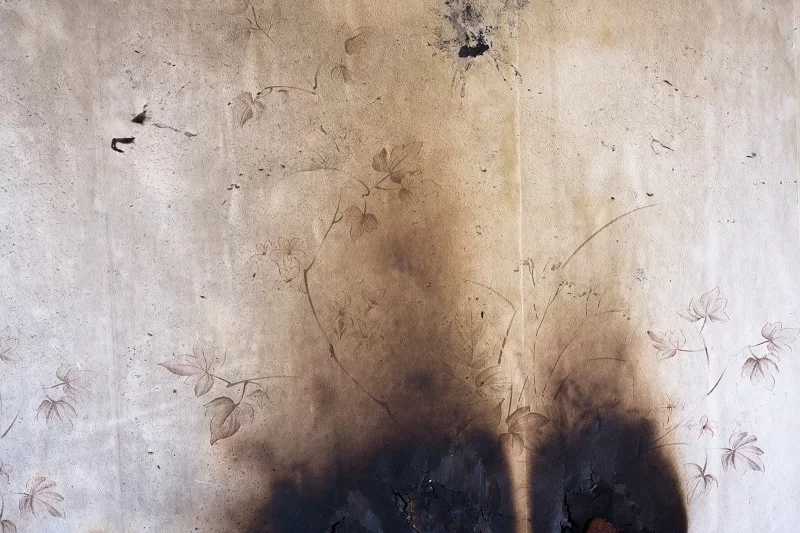
When building materials remain wet after a leak, storm or flood, the priority is not only mould removal but also effective drying. On-Guard provides water damage restoration and structural drying where required.
When Should You Call a Black Mould Removal Specialist?
- mould keeps returning after cleaning
- multiple rooms or a large area are affected
- mould appeared after significant water damage
- the moisture source is unclear
- mould may be present behind walls, ceilings or other concealed areas
- porous building materials such as plasterboard, carpet or insulation are affected
- a persistent musty smell remains without an obvious source
- subfloor or roof-cavity contamination is suspected
- containment or specialist drying may be required
Not every small patch requires a full remediation project. NSW Health provides routine cleaning guidance for some mouldy surfaces, but also stresses that mould is likely to return unless the cause of the moisture is addressed.
If the mould is recurring, widespread or linked to water damage, request an assessment before repeating the same surface-cleaning process.
Our Black Mould Removal Process
1.
Assessment and moisture readings: identify visible mould and check affected areas using professional moisture metres, thermal readings and airflow or humidity checks.
2.
Containment where required: affected rooms may be isolated and HEPA air scrubbers installed to reduce cross-contamination during remediation.
3.
HEPA H-Class vacuuming: remove loose particulate contamination from affected surfaces using controlled HEPA filtration.
4.
DF200 treatment: pre-treat and chemically decontaminate appropriate affected surfaces using On-Guard’s existing two-part DF200 process.
5.
Hot-water extraction and surface rinse: remove residues and contamination using professional extraction equipment where appropriate.
6.
Structural drying: install drying equipment where moisture remains in building materials.
7.
Verification and recommendations: review treated areas, arrange optional testing where required and provide moisture or ventilation recommendations to reduce recurrence risk.
Black Mould Cleaning vs Professional Remediation

For a deeper explanation of the difference, see our guide to mould cleaners vs professional remediation.
Why Black Mould May Keep Coming Back After Cleaning
Recurring mould often means the conditions supporting growth remain. Common contributors include condensation, high humidity, roof or plumbing leaks, poor ventilation, hidden dampness, wet plasterboard or timber, subfloor moisture and unresolved water damage.
The aim of professional remediation is therefore broader than changing how the surface looks. It should address the current contamination and identify moisture or building conditions that need to be corrected, referred or monitored.
What Does IICRC S520 Cover?
The current ANSI/IICRC S520 Standard for Professional Mold Remediation is the 2024 Fourth Edition. The IICRC describes it as a procedural standard covering areas including remediation principles, building and material science, remediator qualifications, safety, inspection, structural and HVAC remediation, contents and post-remediation verification.
Do You Need Mould Testing Before Black Mould Removal?
Not always. NSW Health states that because most household mould is visible, testing is generally not necessary simply to establish that mould is present. Testing may be useful where contamination is suspected but cannot be located, an independent assessment is required, project conditions are complex or post-remediation verification forms part of the agreed scope.
On-Guard already offers optional pre- and post-remediation sampling with laboratory results where required. If you are unsure whether visible growth extends into concealed materials, a professional mould inspection may help define the scope first.
How Much Does Black Mould Removal Cost in Sydney?
There is no single mould-removal price because the scope varies by property. Cost may depend on the affected area, number of rooms, material type, access, contamination severity, moisture levels, hidden growth, containment, structural drying, testing and whether damaged materials need removal or repair.
On-Guard currently offers free inspections and quotes statewide, allowing the scope to be based on the actual property rather than a generic estimate.
Request a free inspection and black mould removal quote for your Sydney property.
Why Choose On-Guard for Black Mould Removal in Sydney?
24/7 response for urgent mould issues
moisture mapping, thermal checks and airflow or humidity readings
HEPA H-Class vacuuming and HEPA air scrubbers where required
DF200 treatment, hot-water extraction and structural drying within the existing remediation process
optional testing and laboratory results where required
Residential, strata and commercial remediation capability across NSW
Black Mould Removal Across Sydney and NSW
On-Guard provides mould remediation for homes, apartments, strata properties, rental properties and commercial sites across Sydney and wider NSW. From visible black mould in a bathroom or bedroom through to concealed moisture, water-damage-related contamination and larger commercial remediation, the scope is matched to the property and the conditions found during assessment.
For urgent issues, On-Guard accepts calls 24 hours a day, 7 days a week.
Frequently Asked Questions About Black Mould Removal
What is black mould?
Black mould is a common description for mould that appears dark green, brown, grey or black. The colour does not reliably identify the species. The important remediation questions are how extensive the growth is, what materials are affected and whether the moisture source has been corrected.
Is all black-coloured mould Stachybotrys?
No. Stachybotrys chartarum is one greenish-black mould species, but many other moulds may also appear dark. Appearance alone is not enough to identify the species, and the removal decision should not be based on colour alone.
Is black mould dangerous?
Mould exposure affects people differently. Some people may experience irritation or respiratory symptoms, while others have no symptoms. People with asthma, allergies, breathing conditions or weakened immune systems may be more sensitive. Seek medical advice if you have health concerns.
Can I remove black mould myself?
A small, localised patch on a suitable surface may sometimes be cleaned using appropriate household guidance if the moisture source is known and corrected. Professional advice may be more appropriate where mould is widespread, recurring, hidden, linked to water damage or affecting porous materials.
How do professionals remove black mould?
The process depends on the property. On-Guard’s current remediation process may include moisture mapping, containment, HEPA H-Class vacuuming, DF200 treatment, hot-water extraction, structural drying and optional testing where required.
How much does black mould removal cost in Sydney?
Cost depends on the affected area, materials, access, moisture levels, contamination, containment, drying and testing requirements. On-Guard offers free inspections and quotes statewide so the price can be based on the actual remediation scope.
Do I need mould testing before removal?
Not necessarily. Visible mould generally does not need testing simply to confirm that mould exists. Testing may be useful where the source or extent is unclear, concealed contamination is suspected, an independent assessment is required or verification forms part of the project.
Can black mould grow behind walls?
Yes, mould can develop in cavities or other concealed areas when moisture is present. Signs may include recurring surface mould, water-damage history, damp materials or a persistent musty smell. Inspection and moisture readings may help determine whether further investigation is warranted.
Will professional mould removal stop it coming back permanently?
No responsible remediation process should promise that mould can never return. Recurrence depends heavily on future leaks, humidity, ventilation, condensation and other moisture conditions. Remediation addresses the current problem while moisture control helps reduce the risk of regrowth.
How quickly can On-Guard attend a mould issue?
On-Guard accepts urgent calls 24/7 across NSW. Attendance depends on the location, access and current availability, so contact the team directly to confirm the appropriate response for your property.
Need Black Mould Removal Sydney? Contact On-Guard Sanitisation to request a free inspection and quote.

We Clean Up Life’s Accidents
If you have to deal with the aftermath of a virus outbreak, accident, death, drug lab incident, or hoarding, On-Guard Sanitisation is here to restore your business, home, or property. We quickly get things back to the way they were


